
Finding Caledonia Residents Lawfully
Start with what you already know. An address points straight into the Village of Caledonia Property Data Search and the county's tax and GIS systems. A name opens different doors instead: a recorded deed, a public court summary, a professional credential, or a business filing. Old road and settlement names live best in library and historical society collections. None of these is one government people list. They are separate resident rolls. Ownership and residence are not the same thing. A parcel record names an owner and a mailing address, not every person at the site. MyVote shows only what state law allows. Rural Caledonia shows the gaps most. Before treating two entries as one person, note each source's date and exact wording.
- Check the village assessor link and Racine County Tax Inquiry by name, address, or parcel number.
- Use MyVote Wisconsin only for the voter information its name or address forms return.
- Carry the parcel number or owner name into LandShark or TriMin to find recorded instruments.
- For an earlier household, consult the Racine Public Library and UW-Parkside directory holdings.
- When no online index fits, send a focused request to the Village Clerk or other proper custodian.
Caledonia Resident Records Desks
Village and county offices split the work between them. The village assessor keeps public assessment files and links to its property search. The Register of Deeds holds deeds, mortgages, plats, and vital certificates. Elections start with MyVote and the Village Clerk. The county clerk takes county-level questions. For an address-first approach, the Caledonia street directory shows how parcel, GIS, and deed records fit together.
Racine County Register of Deeds
730 Wisconsin Ave
Racine, WI 53403
(262) 636-3208
Land and vital record access
Village of Caledonia Assessor
5043 Chester Lane
Racine, WI 53402
(262) 835-6420
Property Data Search entry
Village Clerk and MyVote
5043 Chester Lane
Racine, WI 53402
(262) 835-4451
MyVote Wisconsin
Caledonia Parcel Records First
The Assessor page is the local entry point to Caledonia assessment data. Public files there can show taxable real and personal property, dwelling traits, lot size, sales, and assessed values. Racine County Tax Inquiry adds more. Search by name, address, or parcel and pull tax bills, sales history, and links to GIS and land records. The parcel number ties them all together. A public Racine County property detail page shows how one parcel record is laid out.
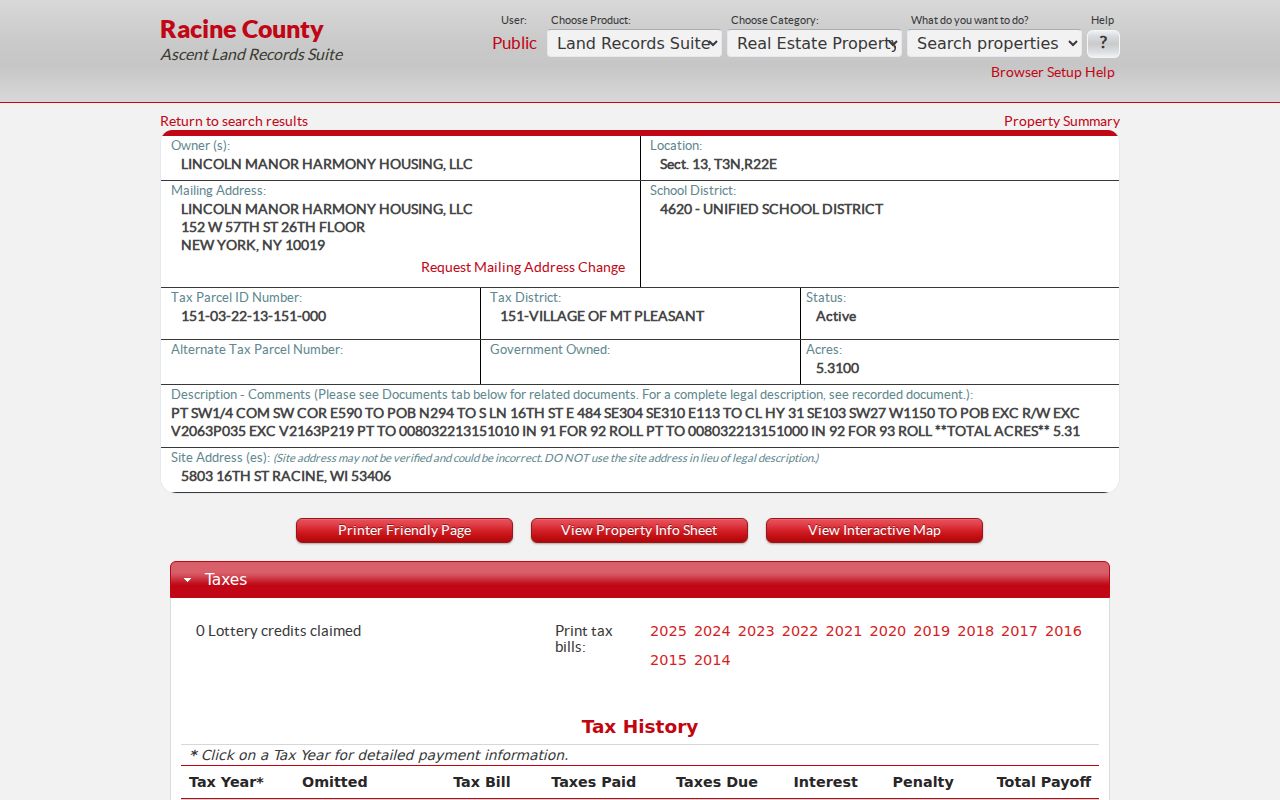
Treat the parcel page as current tax and assessment evidence. Then open the recorded deed. County guidance warns that a tax-bill legal description is abbreviated, so the deed supplies the full transfer and ownership details.
| Search fact | Best use |
|---|---|
| Owner name | Locate parcels tied to a named owner |
| Site address | Match a physical location |
| Parcel ID | Move between tax, GIS, and deed tools |
| Sales history | Identify dates worth checking in recorded documents |
Caledonia Names in Land Records
The Racine County Register of Deeds offers two search portals. These are LandShark and the newer TriMin Document Search. LandShark handles tract, legal-description, grantor, grantee, and parcel searches. Its occasional-user guide describes computer tract indexing with real-estate images from 1989 forward. Yet county pages say the documents themselves reach into the early 1900s. Those two claims cover different things. So 1989 is not the start of the county's land records. It is only the start of one image set.
Free searching depends on the route you take. Images and certain name searches carry the charges listed in the guide. Walk-in visitors can use public computers on a first-come, first-served basis. That access runs during the Register of Deeds library-search window. Staff will not run a title search for you. Try several spellings of a name. The county cautions that old index errors and hard-to-read scans happen.
- Parcel
- A mapped unit of land assigned a county identifier.
- Index
- A finding aid that points to a filed record, not the full document.
- Grantor and grantee
- The party giving an interest and the party receiving it.
- Criss-cross directory
- A directory arranged by street or phone number rather than only by surname.
Current Caledonia Resident Directories
Modern Caledonia resident records are purpose-built rolls. Each one lists only the people or entities tied to its official task. No row proves a whole household. Pick the access point that matches your question and note its date. When a result truly matters, confirm the key fact with the custodian of that record.
| Source | Who It Lists | Keeper | Access |
|---|---|---|---|
| Property and tax roll | Named owners and mailing contacts | Village assessor and Racine County | Public online search |
| MyVote Wisconsin | Registered voters within allowed fields | Wisconsin Elections Commission | Name or address search |
| Land record index | Parties to deeds and other instruments | Register of Deeds | Online and public terminal |
| WCCA | Parties in nonconfidential circuit cases | Wisconsin court system | Summary online, file at court |
| Association channels | Participants or member households | Private civic groups | Often member-only |
The Caledonia resident lookup offers the straightest path for verifying one person. Keep in mind that a professional license or business filing proves a credential or registered role, not a current home address.
Caledonia Voter Lookup Boundaries
MyVote Wisconsin takes a first name, last name, and birth date. Together those pieces run a voter record search. There is also an address route using street address, unit, city, and ZIP. From there the system can lead to polling-place and participation-status details. Wisconsin registers no voters by party. Confidential addresses and other protected data stay out of the public result. The live form is the best check of current fields and status.
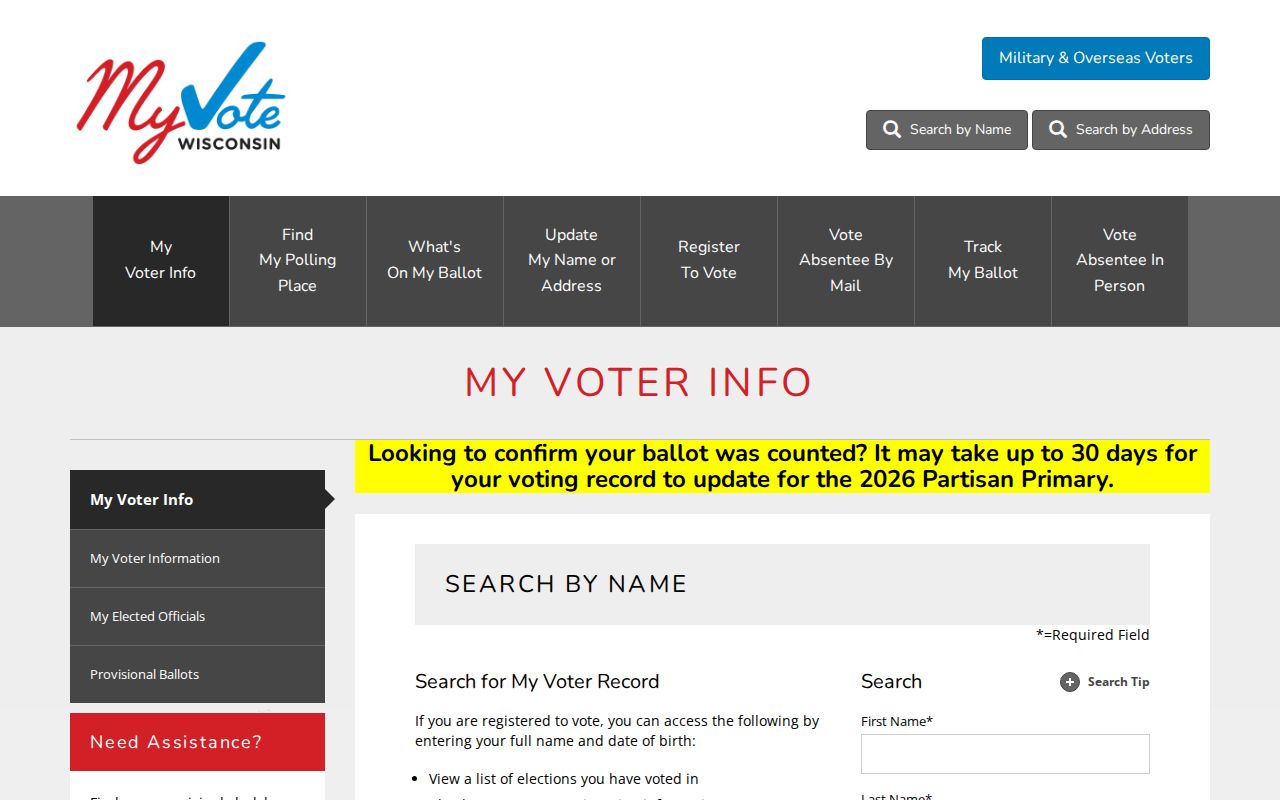
A missing match is not a wall. Try a different spelling, a birth date, or a former Caledonia address first. The official route through the municipal clerk also resolves hard cases. Wisconsin sets the rules for voter-list access in Wis. Stat. §§ 6.36 and 6.47, and privacy controls must never be worked around.
Caledonia Court Record Checks
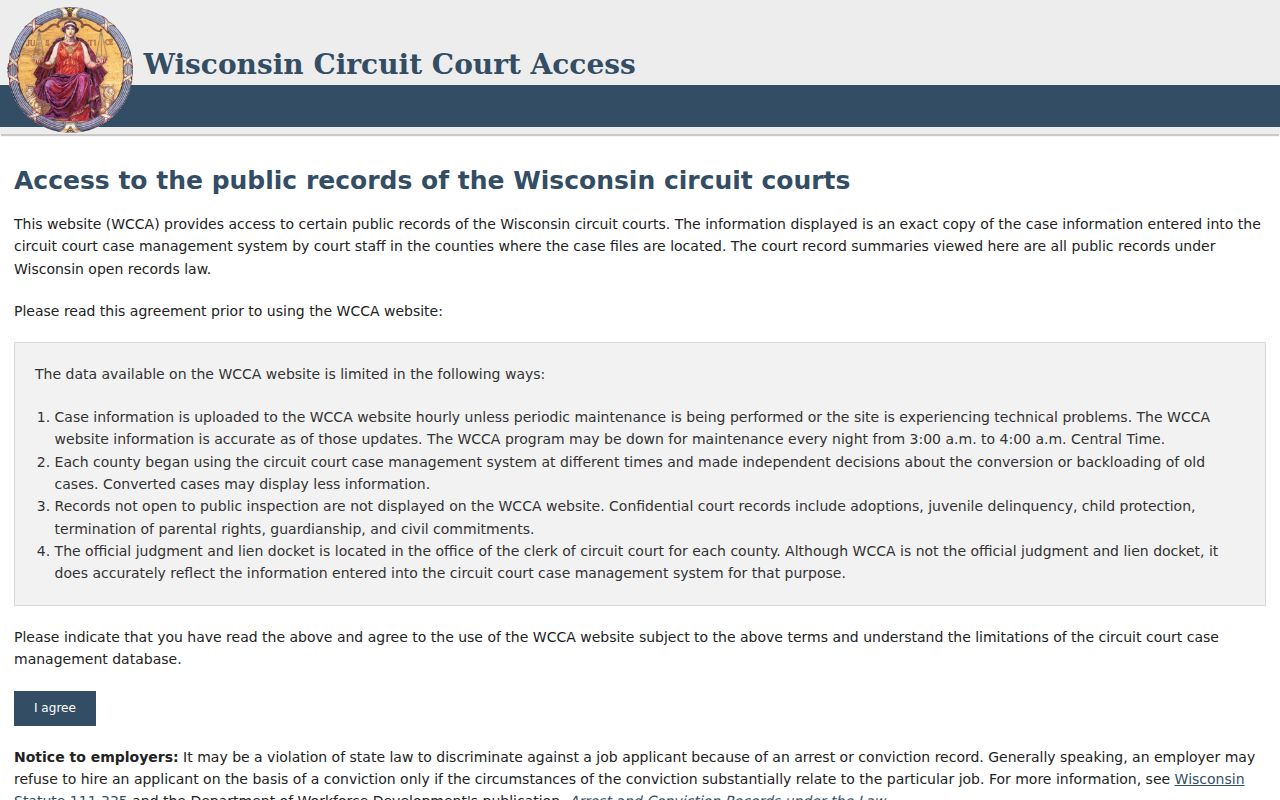
The Wisconsin Circuit Court Access portal serves up case records. It covers Caledonia and every other county. Four entry points are offered. These include a simple search, an advanced search, a judgment search, and a report search. What comes back is a case summary with docket-level detail, not the full court file. Confidential matters stay sealed. Protected details are withheld too. Names can collide as well. Two different people may share one name. Weigh the county, the case type, the dates, and any address fragments before you settle on a match.
The portal's tabs and fields shift over time, and the current search view reflects that.
The Caledonia Municipal Court handles local ordinance violations and traffic citations. Not every case lands there, though. Anything beyond its reach sits with the Racine County Clerk of Circuit Court, which opens its counter, public terminals, phone lines, and mail process to the public. Copy requests follow the same channel.
Requesting Caledonia Resident Records
Wisconsin's Public Records Law, Wis. Stat. §§ 19.31-19.39, starts from a presumption of access. The law then weighs exceptions through a balancing test. A strong request to any Caledonia records office names the custodian, the record type, a date span, the person or address involved, and how you want delivery. The village form offers email, mail, pickup, and other delivery choices. It asks requesters to allow at least ten days. State law still requires production as soon as practicable and without delay, and it sets no single universal deadline.
Fees stay tied to actual, necessary, and direct costs of reproduction, processing, location, and delivery, within statutory caps. Broad searches justify asking for an estimate first. Police reports belong with Caledonia Police. Juvenile records, victim information, pending-discovery material, and other protected content may be redacted or withheld. For general municipal routing, the Village Clerk is the best first stop.
Lawful use. Use Caledonia records for legitimate personal research. Never use an address or identity detail to stalk, harass, intimidate, or harm anyone.
Caledonia Vital Record Access
Vital certificates work differently from open resident rolls. Birth, death, marriage, and divorce records stay controlled, and Wisconsin limits who may receive them. The Racine County Register of Deeds issues statewide births from October 1, 1907, marriages from the same date, deaths from September 1, 2013, and divorces from January 1, 2016. Earlier events may call for the county of occurrence or the state office. Wisconsin DHS publishes the forms and genealogy instructions.
Eligibility and identification drive every application. The first certified copy costs $20, and extra copies of the same record in one order run $3 apiece. Immediate family usually qualifies. Other applicants need notarized authorization or a statutory basis. Mail requests require a cashier's check or money order plus a self-addressed stamped envelope. The county also warns against mailing original identity documents. VitalChek online orders add service and shipping fees.
The Wisconsin DHS record-order page lists current forms, identification rules, and search-period choices.
Wis. Stat. §§ 69.20-69.22 set the rules for access and copies of vital records. Wisconsin publishes no statewide online vital index for the public. Options still exist for genealogy work. Depending on the date and the event, researchers can book an appointment to use the DHS in-person index, take the Register of Deeds genealogy route, or turn to pre-1907 resources held by the Wisconsin Historical Society.
Caledonia Credentials and Entities
Two state systems can confirm a public role without ever proving where a person lives, and the Caledonia residents directory treats them as entity tools only. The Wisconsin DSPS License Search accepts an individual or organization name, credential number, profession, category, or business name. Results may show credential status, issue and expiration dates, location, specialties, orders, other names, and professional relationships. Treat those fields as license facts at the record date, nothing more.
The Wisconsin DFI Corporate Registration Search works differently. It covers registered entities. A search can start from the legal entity name, initial registration date, entity type, registered agent, registered-office address, or DFI entity ID. It is not a complete directory of sole proprietors, trade names, phone numbers, federal tax IDs, or every member of a business. The DFI search screen itself shows why entity research and a resident lookup must stay separate. A city directory entry about a person is simply not the same thing as a corporate filing.
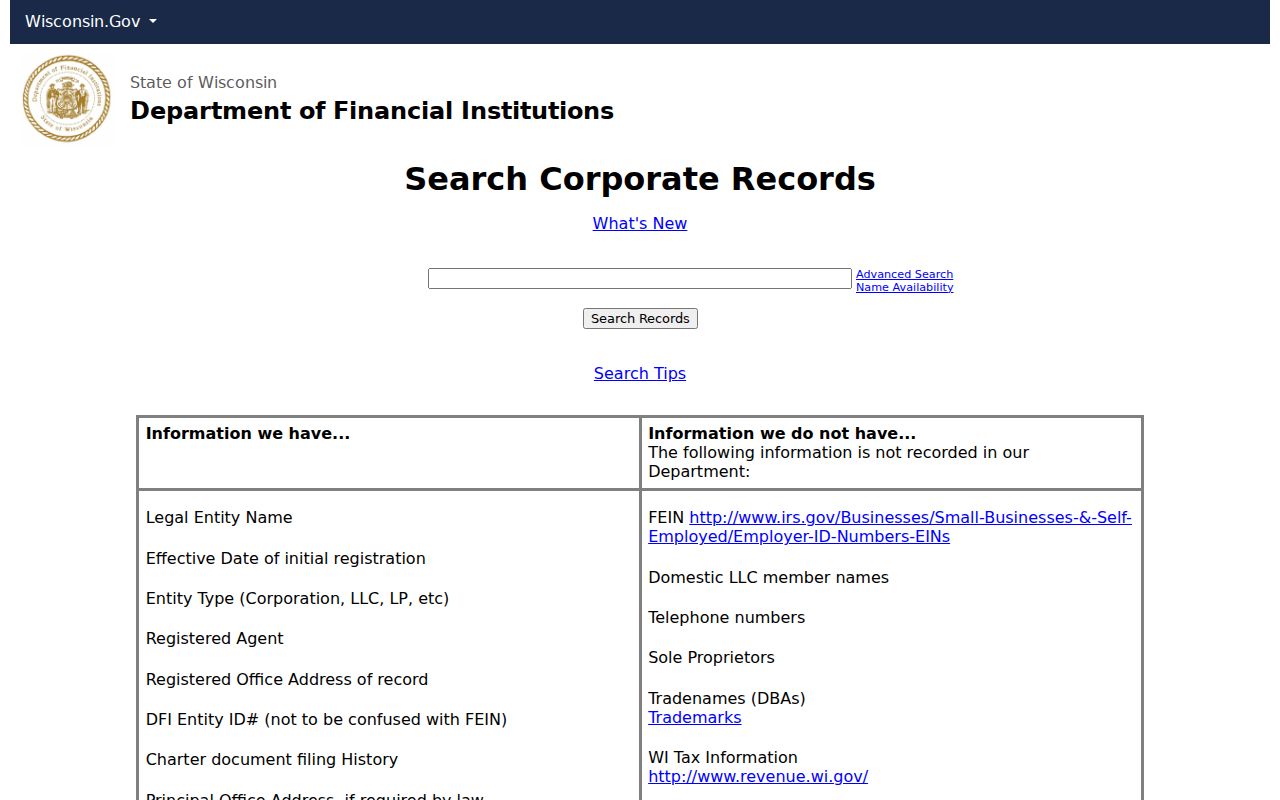
A registered-agent address might be a law office, a service company, or a filing contact. That distinction matters for any Caledonia street directory use. Confirm a seller or organization by matching the exact legal name. Match the status, entity ID, and filing history too. DFI offers an order route when a filing document is needed. Never convert a listed office address into a claim that an individual resides there.
Caledonia Has Six ZIP Links
A 2025 village resolution identifies six ZIP codes touching village territory. Those are 53108, 53126, 53144, 53158, 53402, and 53405. The village pursued a unique Caledonia ZIP, with 53108 central to that policy discussion. USPS has completed no realignment, though. That leaves the USPS ZIP Lookup as the current authority for one exact mailing address.
A Racine or Franksville mailing label does not by itself settle anything. It does not place a parcel inside or outside the village. Compare the USPS result with the parcel's municipality and GIS geometry instead. Mailing names and municipal borders simply disagree here. That mismatch is why resident rolls and past residents listings may show "Racine" even when the land lies in Caledonia.
Protected Caledonia Resident Details
Public access to resident details has firm limits. Wisconsin DOJ's Safe at Home program gives participants who face safety risks a substitute address along with mail forwarding. Election and court systems also shield certain addresses and identifying details. Follow the program's directions. Don't guess a true location from partial records.
Commercial people-finder results blend old addresses, relatives, and strangers who share a name. Official rolls are narrower but clearer. Each entry names its keeper, date, and purpose, yet neither category proves every listed fact is current, so a residents directory search stays strongest when each claim keeps its source.
| Source type | Strength | Main limit |
|---|---|---|
| Official record | Known custodian and legal purpose | Narrow scope and protected fields |
| Commercial compilation | Broad leads | Unknown merges, dates, and errors |
| Historical collection | Original period context | Gaps and changing place names |
Historical Caledonia Resident Directories
Historical Caledonia directories start at the Racine Public Library. Its genealogy and local-history collection holds city directories and newspapers, plus onsite Ancestry, BadgerLink, HeritageQuest, and FamilySearch. History Room staff can guide visitors through it all. UW-Parkside inventories Racine and Kenosha directory years from 1850 through 2006. Farmers directories often fit rural Caledonia better. A Racine book is only a lead, though, since its city coverage may never have reached a Caledonia road.

Copy the place name exactly as the old entry spells it. Tabor, North Racine, Ives Station, Sterns Crossing, and Skunk Grove are old labels. They no longer match modern maps. Yet each one can open doors. A hamlet name may point toward deeds, newspaper items, or cemetery records. It may also point toward the Caledonia Historical Society. Settlement context helps too. The official village history places Bohemian settlers in 1849. Roughly one hundred families lived in the Tabor area within five years. That detail can explain why an ancestor appears under a farm or hamlet rather than a street number. Fuller collection notes live in the Caledonia city directory.
Caledonia History Beyond a Name
The Caledonia Historical Society looks beyond names. It maintains a historical village at 7330 Five Mile Road, anchored by the 1877 Town Hall. Open houses run the third Sunday of each month, May through October, noon to 3 p.m. That collection helps when a resident appears only under a farm, school, church, or hamlet rather than a street number.
The official village history adds small name clues. One is the Husher and “Hoosier” spelling story. Another is the trading-post account tied to Jacques and Louis Vieau around 1832. Treat both as attributed historical leads. Pair them with a dated map, city directory, deed, newspaper, or vital record before naming a person.
Good notes matter just as much. Log every detail. That means source, record date, access date, original address wording, modern jurisdiction, and record type. Add any unresolved question too. When a surname is common or a road crossed an old township line, a confidence note pays off, because this habit keeps a Caledonia residents directory trail auditable and makes later corrections far easier.